
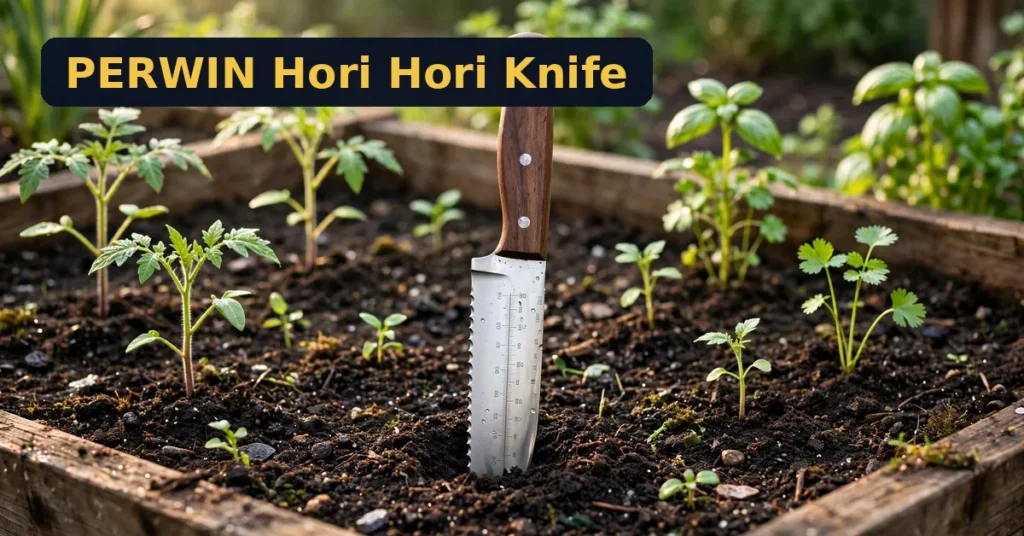
Most gardeners carry a trowel, a weeder, a transplanter, and a knife. The PERWIN Hori Hori Garden Knife tries to replace all four with one tool. It costs about $19. But can a budget blade really dig, weed, saw roots, and measure planting depth?
In this honest review, I go through the PERWIN in detail. I cover the 7-inch stainless blade, the full-tang walnut handle, and the catches owners report. I also flag one listing trap before you buy. Finally, I compare it with the Nisaku NJP650 and the Barebones Ultimate, so you can choose with clear eyes.
Quick Verdict
Rating: 4.3/5
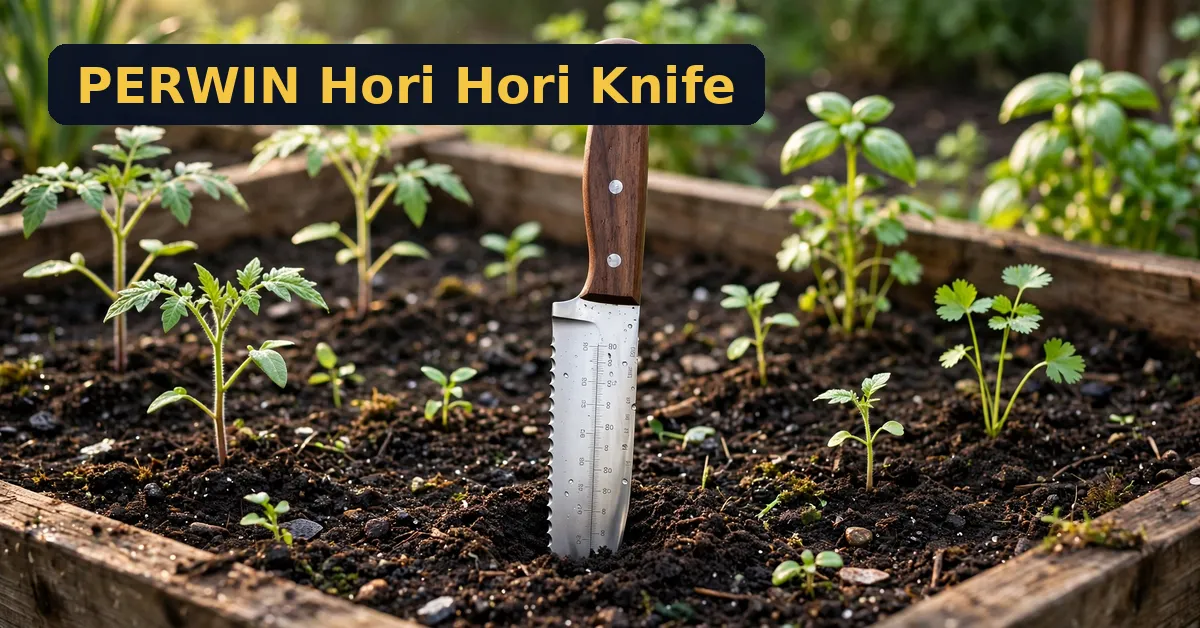
The short version: The PERWIN hori hori is a genuinely sturdy multi-tool for the garden. Its 7-inch stainless blade pairs a smooth edge with a serrated edge, and etched depth marks help you plant at the right depth. The full-tang walnut handle feels solid, and a sheath comes in the box. However, the straight edge may need a quick sharpening out of the box. The wooden handle also needs basic care. Even so, at about $19 it undercuts premium hori hori knives by a wide margin.
Best for: Home gardeners who want one tough tool for digging, weeding, transplanting, and dividing, without paying heritage-brand prices.
What Is a Hori Hori Knife?
A hori hori knife is a Japanese gardening tool that blends a trowel and a knife into one blade. One edge stays smooth for slicing, and one edge is serrated for sawing roots. The blade also carries etched depth marks for planting. Gardeners use it to dig, weed, transplant, divide, and measure.
The PERWIN follows that classic pattern closely. Its blade has a gentle bowl shape, like a shallow trowel, so it scoops soil as it digs. The tool measures 12.1 inches overall, with a 7-inch blade and a walnut handle. It also works beyond the flower bed. Owners use it for cutting twine, opening soil bags, and even light camping and fishing tasks.
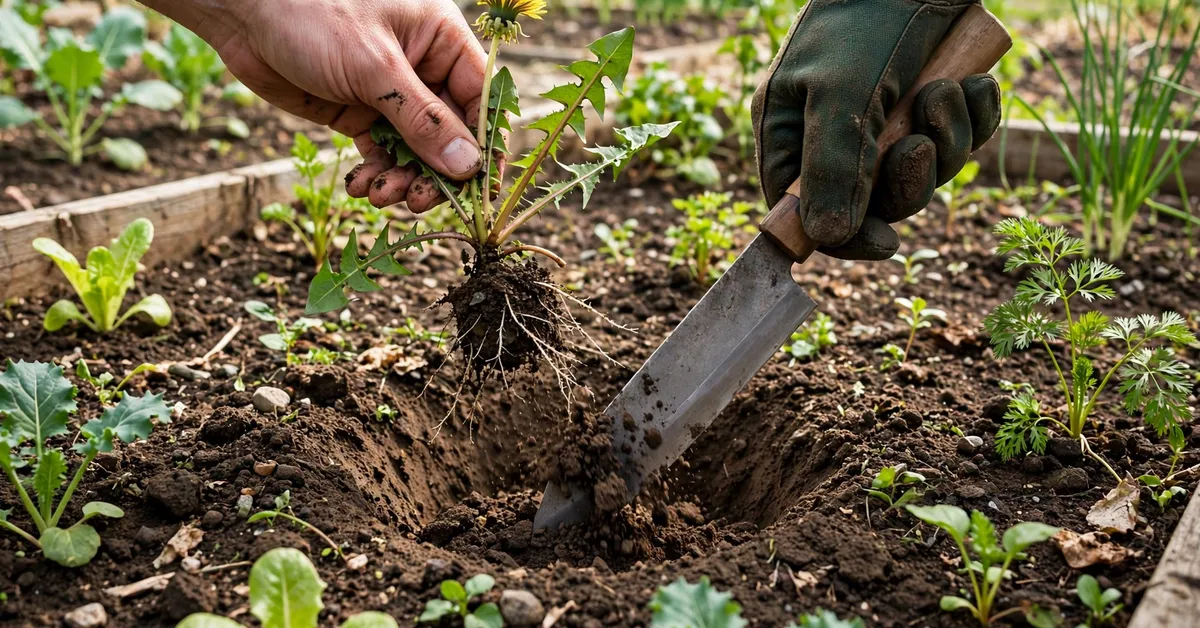
Who is it for? It suits vegetable growers, flower gardeners, and anyone who plants bulbs each fall. It also suits beginners who want one tool instead of a bucket of tools. However, it does not suit anyone who only does light container work on a balcony. A simple hand trowel covers that job for less money and less weight.
Who Sells It? Brand Credibility Check
PERWIN is an Amazon-native tool brand. Its storefront slogan is “Live an easy life and enjoy convenient tools.” This is not a heritage Japanese maker with a century of history. Instead, it is a high-volume Amazon brand that sells practical tools at low prices.
Even so, this knife has a real track record. The listing holds about 4.8 stars from roughly 2,600 ratings, per HGTV’s garden coverage. BestReviews.guide ranked it the number one soil knife in the US and number two among hori hori knives overall. Mens Journal also featured it as a bestselling garden knife, and Amazon showed “100+ bought in past week” on the listing.
One caveat still belongs here. Support runs through Amazon and the seller storefront, not a US service network. That is normal at this price. It is also one reason this review lands at 4.3 stars, not higher. The tool itself is strong, but the safety net behind it is thinner than a premium brand’s.
PERWIN Hori Hori Features — In Detail
7-Inch Stainless Blade, Two Working Edges
The blade is 7 inches of stainless steel, about 2.1 inches wide. One side carries a smooth edge for slicing roots, stems, and twine. The other side carries a serrated edge for sawing through tough roots and small woody growth. As a result, you rarely need to walk back to the shed mid-task. Owners consistently praise how the blade cuts into compacted and rocky soil. Stainless steel also resists rust far better than carbon steel, which matters for a tool that lives in damp soil.
Etched Depth Measurement Marks
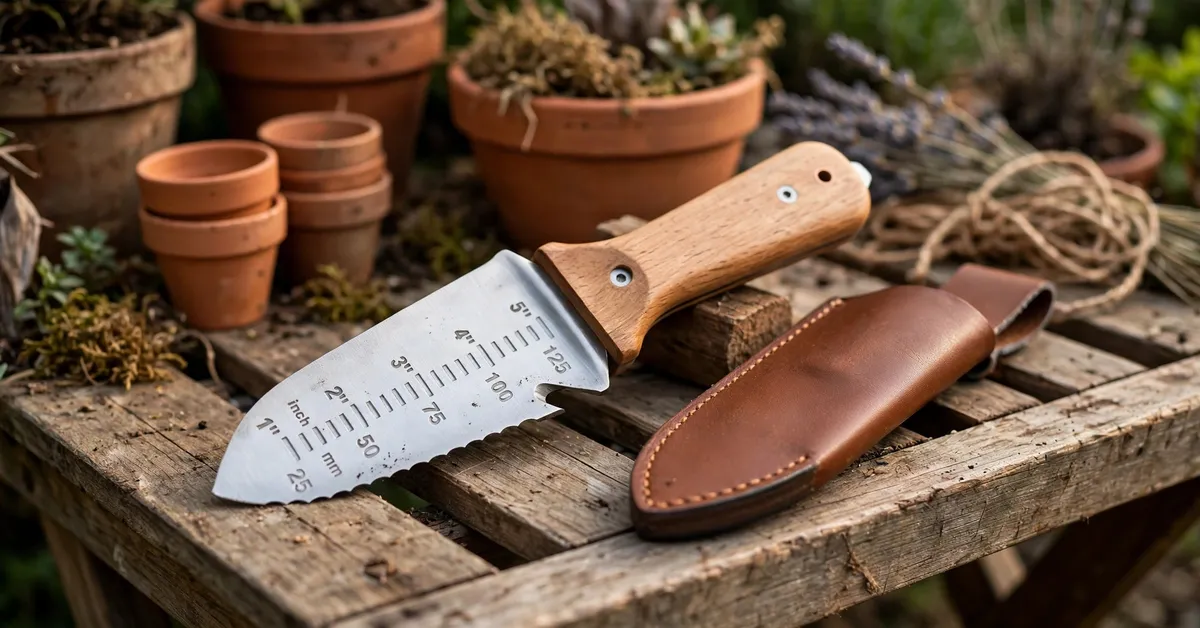
Depth marks are etched into the blade in inches. You push the blade into the soil and read the depth at a glance. That small detail removes the guesswork from bulb planting. Tulips, garlic, and onions all want specific depths, and this ruler is always in your hand. It also helps with seed furrows and transplant holes. Few tools at this price include the marks, and owners name them as a daily-use feature, not a gimmick.
Full-Tang Walnut Handle With Three Rivets
The steel runs the full length of the handle. That full-tang build is the main reason this knife feels sturdy instead of flimsy. Three metal rivets lock the walnut scales in place. The handle shape fills the hand and gives strong control during prying and sawing. A hanging hole at the end lets you store it on a hook in the shed. However, walnut is real wood, so it needs basic care. Dry it after wet work, and rub in a drop of oil now and then.
Cord-Cutting Notch That Doubles as a Bottle Opener
A small comma-shaped notch sits near the handle. It slices twine, string, and plant ties without opening the main edge. The same notch works as a bottle opener. That sounds like a novelty, but gardeners open plenty of bottles and bags during a long session. Small touches like this explain why owners call it “the tool I didn’t know I needed.”
Protective Sheath With Belt Loop
A protective sheath comes in the box. It has a belt loop, so the knife rides on your hip as you move around the beds. The sheath also keeps the dual edges safely covered in a tool bag or bucket. That said, owners describe the sheath as functional rather than premium. Some wish it felt more robust. It does its job, but it is not the heirloom leather piece you get with premium kits.
Size and Weight
The knife measures 12.1 inches in total, and the product data lists about 0.5 kg. In the hand, that heft is a real advantage in hard soil. The blade drives in with less effort from your wrist. Still, the weight cuts both ways. Gardeners with small hands may find the handle a bit large, and long overhead work can tire the arm. If you have joint issues, weigh that trade-off before you buy.
Pricing and Full Cost
The PERWIN sells for about $19 at the time of writing. HGTV listed it at $18.99, and Mens Journal reported $20 in October 2026, down from a $36 list price. Amazon prices move often, so check the current price before you decide. Even at the top of that range, it sits well below the Nisaku NJP650 at about $22 and far below the Barebones Ultimate at about $60 for the tool alone.
There are no bundles or hidden extras forced on you. It is a single Amazon product at a single price. Ongoing costs are near zero. You may want a basic sharpening stone one day, and a drop of mineral oil for the handle. That is the full list.
Check the Version Before You Buy
Here is the listing trap I mentioned. Amazon’s page for this knife shows a “Newer Version Available” note. That newer version has a shorter 6-inch blade instead of the 7-inch blade reviewed here. Both are legitimate PERWIN products, but they are not the same tool. Before you check out, confirm the listing says 7 inches and 12.1 inches overall. If you landed on the 6-inch page, decide on purpose rather than by accident. This review covers the 7-inch original, ASIN B0CDNVR2P3.
Full-Cost Summary
- Product price: about $19 at the time of writing ($18.99–$20 tracked in October 2026; reported list price $36).
- Shipping: standard Amazon delivery terms at checkout.
- In the box: the 7-inch hori hori knife and a protective sheath with belt loop.
- Ongoing costs: near zero — an occasional sharpening and a drop of oil for the walnut handle.
- Care: hand wash only; dry the blade and handle after use.
- Returns: covered by Amazon’s standard return policy for this listing.
Pros and Cons
The Pros
- Full-tang stainless blade feels genuinely sturdy in hard and rocky soil.
- Two working edges: smooth for slicing, serrated for sawing tough roots.
- Etched depth marks make bulb and seed planting precise.
- Comfortable walnut handle with three rivets and a hanging hole.
- Protective sheath with belt loop included in the box.
- About $19 — a fraction of premium hori hori prices.
The Cons
- The flat straight edge may need a touch-up sharpening out of the box.
- The walnut handle needs basic care, and the rivets can loosen over time.
- The sheath is functional but basic; some owners wish it felt more robust.
- At about 0.5 kg it is heavier than some rivals, and the handle runs large for small hands.
- Amazon also lists a newer 6-inch version — check you are on the listing you want.
- Hand wash only.
Who Should Buy the PERWIN Hori Hori?
Best For
- Home gardeners who weed, dig, and transplant every week.
- Bulb and garlic planters who want depth marks always at hand.
- Beginners building a first real tool kit on a budget.
- Anyone fighting compacted or rocky soil where cheap trowels bend.
Not For
- Balcony container gardeners — a light trowel is cheaper and easier.
- Small hands or weak wrists — the handle runs large and the tool has heft.
- Collectors who want a genuine made-in-Japan heirloom tool.
- Anyone who will never dry or oil a wooden handle.
PERWIN Hori Hori vs Alternatives
Vs Nisaku NJP650
The Nisaku NJP650 is the authentic Japanese benchmark in this category. It carries a slightly longer 7.25-inch stainless blade, depth marks, and a simple wood handle. It sells for about $22, and specialist shops rate it around 4.9 stars. Nisaku wins on heritage and on a slimmer, lighter feel. The PERWIN answers with a thicker-feeling full-tang build, a belt-loop sheath, and a price a few dollars lower. For most home gardeners, the PERWIN covers the same jobs. For purists, the Nisaku name still means something.
Vs Barebones Hori Hori Ultimate
The Barebones Ultimate sits at the premium end. Its 6.75-inch heat-treated stainless blade adds a pommel base for hammering, a twine cutter, and a bottle opener. It costs about $59.95 for the tool alone, or $84.95 with its sheath. That is roughly three to four times the PERWIN’s price. Barebones wins on finish, extras, and gift appeal. The PERWIN wins on value, plain and simple. It delivers the core digging, weeding, and measuring job for about $19.
Vs a Cheap Garden Trowel Set
A five-dollar trowel set looks cheaper, until the first neck bends in clay soil. Thin stamped trowels also cannot saw roots or cut twine. The PERWIN costs about four times more than the cheapest trowel, yet it replaces three or four tools at once. If your soil is soft and sandy, the cheap set may serve you fine. If your soil fights back, the hori hori earns its price in one season.
My Exclusive PERWIN Bonus
When you pick up the PERWIN hori hori through my link, I am adding one original bonus. I created it specifically for this tool — not a recycled freebie:
Bonus 1: Hori Hori Garden Tasks Guide (PDF) — a practical guide to transplanting, weeding, bulb depth measuring, and dividing perennials with your hori hori, plus a simple blade care and sharpening routine.
⬇️ Download Bonus 1: Hori Hori Garden Tasks Guide (PDF)
This bonus is free to download right here.
Click the download button above to get it instantly — no forms, no waiting.
Frequently Asked Questions
Is the PERWIN hori hori garden knife a scam or legit?
It is legit. PERWIN is a real Amazon tool brand, and this knife holds about 4.8 stars from roughly 2,600 ratings. Independent roundups rank it among the best soil knives sold in the US. Amazon’s own return policy also covers the purchase. The honest caveats are quality details, not fraud: a flat edge that may need a touch-up, and a basic sheath.
Which version should I buy, the 7-inch or the newer 6-inch?
Amazon flags a newer PERWIN version with a 6-inch blade on this listing. This review covers the original 7-inch model, ASIN B0CDNVR2P3. The longer blade digs deeper holes and gives more leverage in hard soil. The shorter version may suit smaller hands and lighter work. Either way, check the blade length on the page before you pay, because the two listings are easy to confuse.
Is the PERWIN hori hori full tang?
Yes. The stainless steel runs the full length of the handle, and three metal rivets secure the walnut scales. That construction is why the knife tolerates prying and sawing without flex at the neck. Even so, treat it as a knife, not a pry bar. For big taproots, cut a circle around the root first, then lever gently.
How do I sharpen and care for it?
Wash it by hand and dry it fully after each session. Touch up the smooth edge with a whetstone or a fine file when cutting feels dull. Leave the serrated edge to a tapered rod or a professional, because serrations sharpen differently. Finally, rub a drop of mineral oil into the walnut handle when it looks dry. My free tasks guide above covers the full routine.
Will the stainless blade rust?
Stainless steel resists rust well, but no steel is fully rust-proof in wet soil. Sap and fertilizer can stain any blade over time. The fix is simple: rinse, dry, and store the knife in its sheath indoors. Owners who follow that habit report clean blades after many seasons. Owners who leave it outside in the rain should expect surface marks.
Can I use it for camping and fishing too?
Yes, within reason. The blade cuts cord and rope, the notch opens bottles, and the sheath makes it safe to carry. Many owners keep one in a camping kit for site work and food prep tasks. Just remember it is a garden tool first. It is not a survival knife, and local rules on carrying blades still apply when you travel.
Final Verdict: Is the PERWIN Hori Hori Worth It?
Rating: 4.3/5. The PERWIN hori hori delivers the full hori hori experience — digging, weeding, sawing, transplanting, and measuring — in one sturdy full-tang tool. The etched depth marks and the belt-loop sheath make daily work easier. It loses points for an edge that may need a touch-up, a basic sheath, and a wooden handle that asks for basic care. Even so, at about $19 it stands far below the Nisaku and Barebones on price while matching their core job.
Buy it if: you garden weekly, fight real soil, and want one tough tool instead of four flimsy ones.
Skip it if: you only pot plants on a balcony, you want a genuine made-in-Japan heirloom, or the handle size and weight will strain your hands.
Get the PERWIN Hori Hori + My Free Bonus
✍️ My Personal Verdict
I have read the spec sheet, the manual, the Mens Journal coverage, and the patterns in owner feedback for this knife. The story stays consistent. Owners praise the heft first: the full-tang blade cuts compacted soil and taproots without flexing. The depth marks get used daily, not as a gimmick. The complaints are modest and honest ones. The straight edge wants a quick sharpening out of the box. The walnut handle needs drying and an occasional drop of oil. The sheath does its job without feeling premium. At about nineteen dollars, none of that bothers me. I rate it 4.3 out of 5, and I would hand it to any gardener who wants one tool that does five jobs.
Affiliate Disclosure
ZoxDeal is reader-supported. When you buy through links on this page, we may earn an affiliate commission at no extra cost to you. As an Amazon Associate, ZoxDeal earns from qualifying purchases. This does not influence our ratings or reviews. We only recommend products we have researched thoroughly, and we always disclose the honest catches we find.