Google Fitbit Air Review: Screenless Tracking for $99.99? (Honest)
Want a fitness tracker that disappears on your wrist? The Google Fitbit Air is a screenless fitness tracker that costs $99.99 and tracks fitness, heart rate, and sleep without a single notification. It launched in May 2026, hit #1 New Release in Activity & Fitness Trackers, and now holds a 4.3-star Amazon rating across 2,445 reviews. I checked the buyer record, the independent tests, and the real complaints. Here is the honest answer.
The short version: The Google Fitbit Air is the lightest way into Google’s health ecosystem. It weighs 12 grams, runs up to 7 days, and gives you AFib alerts for $99.99. The honest catch is the rating itself: 4.3 stars sits exactly at our bar, not above it. And the band has real limits. There is no GPS, auto-detection covers only about 5 activities, and some owners report sync and battery issues in the Google Health app. Still, for screen-free tracking at $99.99, it is a fair buy — just not a slam dunk.
Best for: people who want screen-free tracking and already live in Google’s health apps.
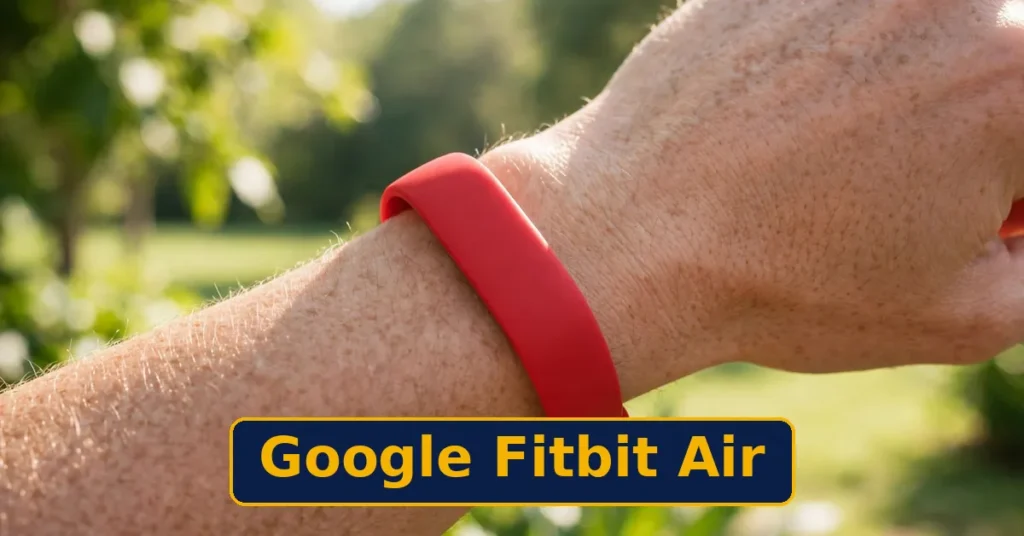
The Google Fitbit Air is a screenless fitness tracker. It has no display, no buttons, and no notifications. It simply records your day — steps, heart rate, sleep, and workouts — and shows it all in the Google Health app on your phone. A small status light is the only thing on the band itself.
Google launched the Air in May 2026 as its first screenless tracker. It targets a clear gap: people who want health data without another glowing screen. Think sleepers who hate wrist glow at night, minimalists who find smartwatches noisy, and anyone who already wears a watch they love. The band costs $99.99 in Berry, with other colors from $94.05 to $121.04. A Stephen Curry Special Edition sells for $129.99. This review covers the standard $99.99 band only.
Who Created the Google Fitbit Air?
Google makes the Fitbit Air. Google bought Fitbit in 2021, and the Air is the first Fitbit tracker built fully inside Google’s health vision. That matters here. The band runs Fitbit OS, syncs through the Google Health app, and carries the same heart-health features as Fitbit’s bigger trackers. Fitbit has shipped trackers for over a decade, from the Charge line to the Inspire line. So the Air is not a startup gamble. It is a focused product from the company that defined the fitness band. The Verge called it the savviest wearable since the Fitbit acquisition. That is strong praise, and it explains the #1 New Release badge.
Key Features — In Detail
Screenless by Design, Just 12 Grams
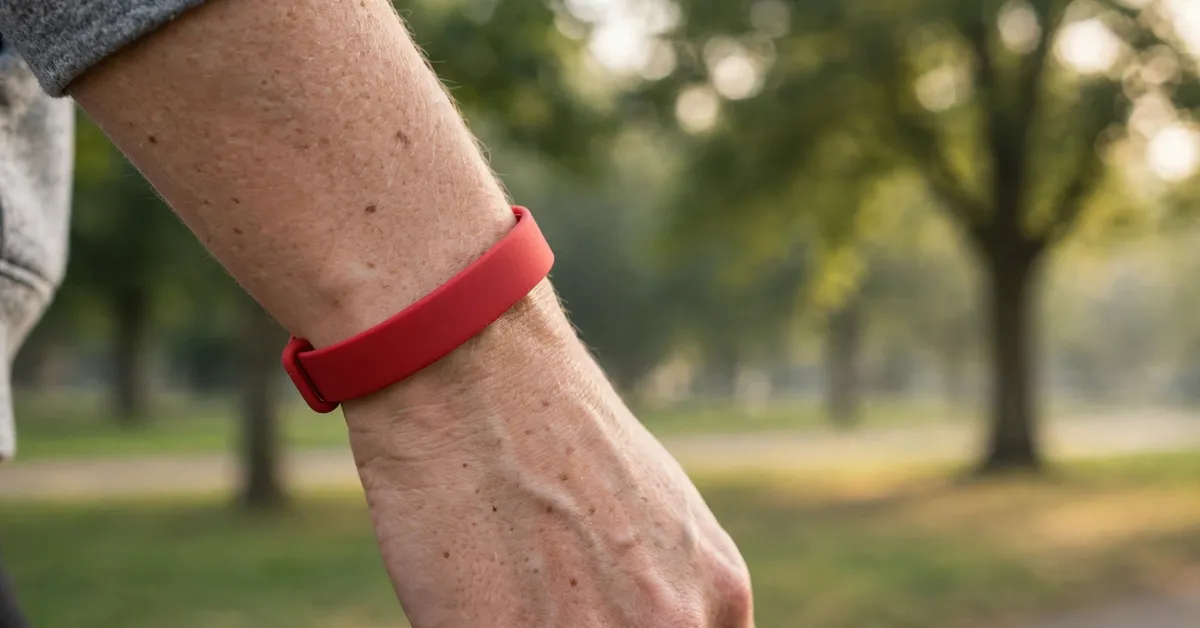
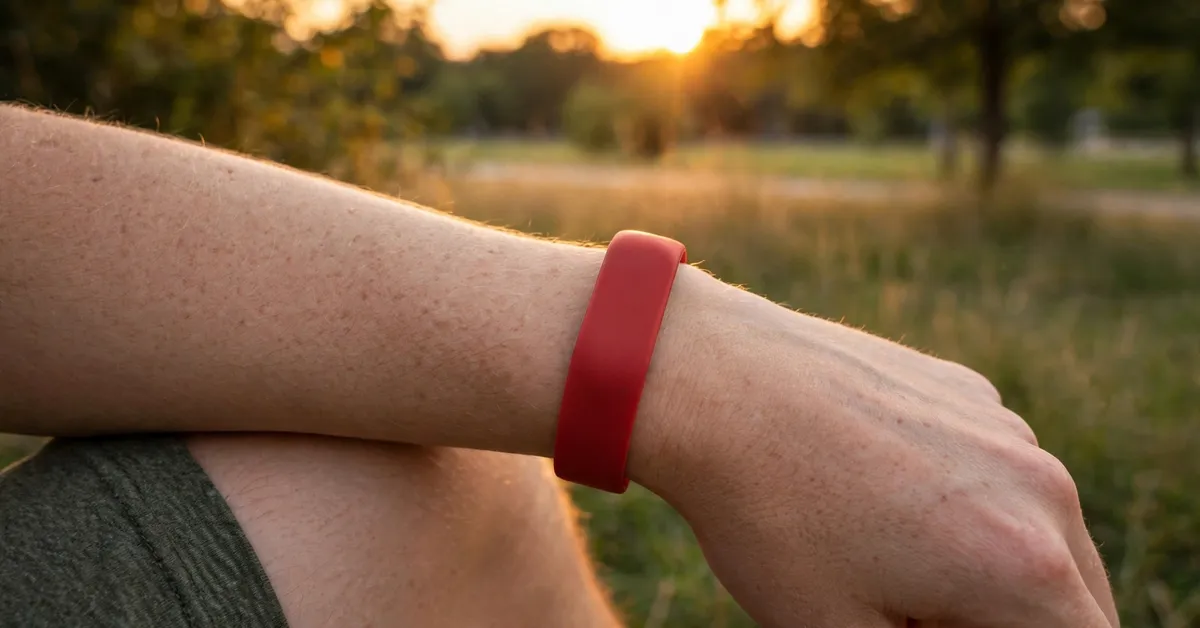
This is the whole point of the Air. At 12 grams, it is lighter than almost every tracker on the market. There is no screen to glow at night, no notification to pull you out of a conversation, and nothing to tap by accident. You wear it and forget it. That is a real advantage for sleep tracking, since a light band stays comfortable all night. The trade is obvious too. You cannot check the time, start a workout, or glance at your heart rate from the band. Every stat lives in the app. If you like checking your wrist, this is the wrong product.
AI-Powered Coaching in the Google Health App
The Air’s brain is the Google Health app. It turns your data into personalized, AI-powered coaching: daily guidance, recovery hints, and training suggestions based on your sleep and exertion. This is the feature Google leans on most. The coaching is genuinely personal, since it reads your own patterns instead of generic targets. However, it is only as good as the sync. Some owners report sync delays and battery quirks in the app, and that weakens the coaching when data arrives late. Core tracking and coaching are free. An optional Fitbit Premium plan costs about $10 a month, but nothing in this review requires it.
Heart Health: AFib Alerts at $99
The headline health feature is irregular heart rhythm (AFib) alerts. The Air watches your heart rate around the clock and warns you about signs of atrial fibrillation. That is a serious feature at $99.99. Most trackers with AFib alerts cost far more, and many are full smartwatches. The optical heart-rate sensor also tracks your rate all day and during workouts. One honest note: the sensor is a tracker-grade optical sensor, not a medical device. Treat its readings as a helpful signal, not a diagnosis. If it flags something, see a doctor.
Battery Life and Quick Charging
Google rates the battery at up to 7 days. That matches the Fitbit Charge 6 and the Garmin Vivosmart 5, and it beats most smartwatches by days. The quick charge is the nicer surprise. Five minutes on the charger gives you up to a full day of battery. So a dead band is a small problem, not a lost day. The honest note is the app complaints. Some owners report battery drain tied to sync issues in the Google Health app. Your mileage may vary, but the pattern is worth knowing before you buy.
Sleep, Heart Rate, and Daily Tracking
The Air tracks sleep stages, resting heart rate, steps, distance, calories, and heart-rate data through the day. Sleep is where the screenless design pays off most. The light band stays comfortable overnight, and the app gives you a sleep score each morning. Heart-rate tracking runs all day and night, which feeds both the coaching and the AFib alerts. The weak spot is auto-detection. DC Rainmaker found that automatic workout detection covers only about 5 activity types. So most workouts need a manual start in the app. If you do varied training, expect to open your phone first.
Water Resistance and Everyday Durability
The Air is water resistant to 50 meters. That means swimming and showering are fine, and sweat is never a concern. The band itself is a simple silicone strap with a proprietary connector. That connector is a real cost to know. Replacement straps from Google cost $35 to $50 each, and third-party options are still thin because the band is new. So budget for straps if you want more than one color. The module is small and light, which also means it is easy to forget you are wearing it. That is the point.
Pricing and Full Cost
The Fitbit Air keeps the math simple. Here is the full cost picture:
Google Fitbit Air (Berry) — $99.99 one-time.
Other colors and bands — from $94.05 to $121.04.
Stephen Curry Special Edition — $129.99 (separate edition).
Optional Fitbit Premium — about $10/month (not required).
Replacement straps — $35 to $50 each (proprietary connector).
There are no mandatory fees of any kind. The three-year total cost is $99.99 if you skip Premium and keep the included strap. That is the same one-time price as the Amazfit Helio Strap, and far below a subscription band. Prices move with sales, so check the live price before you buy.
True screenless design at 12 grams — it disappears on your wrist, day and night.
AFib alerts for $99.99 — heart-health alerts at a tracker price.
Up to 7 days of battery, with a 5-minute charge giving a full day.
AI-powered personalized coaching in the Google Health app, free at the core.
Water resistant to 50 meters — swim and shower safe.
Amazon’s Choice with a 4.3-star rating across 2,445 reviews, and #1 New Release.
The Cons
No built-in GPS — pace and distance need your phone.
Auto workout detection covers only about 5 activity types (DC Rainmaker).
Google Health app sync and battery complaints from owners.
Proprietary straps cost $35 to $50 each.
No screen — every stat and control lives in the app.
The 4.3-star rating sits exactly at our bar — good, but not the strongest in the category.
Who Should Buy the Google Fitbit Air?
Best For
People who want screen-free tracking and hate wrist glow at night.
Sleep trackers who need the lightest possible band.
Google Health users who want AI coaching without a subscription.
Anyone who wants AFib alerts without paying smartwatch prices.
People who already wear a watch they love and want a second, silent tracker.
Not For
Runners who need onboard GPS — this band has none.
Anyone who wants to check stats or start workouts from the device itself.
People who rely on automatic workout detection to catch every session.
Buyers who want a screen, even a small one.
Anyone who dislikes app-only control — every action goes through your phone.
Google Fitbit Air vs Alternatives
Vs Fitbit Charge 6
The Charge 6 is the Air’s bigger sibling, and it costs $159.95 at list. It adds built-in GPS, an ECG app, a color AMOLED touchscreen, and 40+ exercise modes, plus Google Wallet and Maps. It also lasts about 7 days. However, it often drops to about $99.95 to $124 on Amazon. At those prices, the Charge 6 is the better buy for most people, since it does everything the Air does plus GPS and a screen. The Air only wins if you truly want no screen at all.
Vs Garmin Vivosmart 5
The Vivosmart 5 costs $149.99 and keeps a small grayscale OLED screen with a physical button. It also lasts up to 7 days, and it uses your phone’s GPS for routes. Garmin’s app has no subscription at all, and the Vivosmart 5 tracks 14 sports with deeper health metrics like Body Battery. The Air wins on price, weight, and AI coaching. The Vivosmart 5 wins if you want a screen, a button, and Garmin’s free app. Choose Garmin for data depth. Choose the Air for silence and the Google ecosystem.
Vs Amazfit Helio Strap
Both bands cost $99.99, both are screenless, and both work fully without a subscription. The Helio Strap gives you 10 days of battery instead of 7, a bicep-wear option, and a HYROX mode for hybrid athletes. The Fitbit Air is lighter at 12 grams, charges faster (5 minutes gives a full day), and lives in the Google Health ecosystem with AFib alerts. Choose the Helio for training depth. Choose the Fitbit Air for the lightest band, the fastest top-up, and Google’s coaching.
My Exclusive Bonus
When you pick up the Google Fitbit Air through my link, I am adding an original bonus I created specifically to complement this tracker — not a recycled freebie:
Bonus: The Fitbit Air 7-Day Starter Guide — a practical PDF covering the 5-minute first setup, the first-week plan (sleep baseline, coaching setup, and your first AFib check), the charging routine that keeps 7 days real, strap care, and fixes for the most common Google Health sync issues.
Click the download button above to get the bonus instantly — no forms, no waiting.
Frequently Asked Questions
Does the Fitbit Air have a screen?
No. The Fitbit Air has no display at all. A small status light is the only thing on the band. Every stat, setting, and workout control lives in the Google Health app on your phone. That is the whole point of the product, and also its biggest trade-off.
Does it have GPS?
No. There is no built-in GPS. Pace and distance come from your phone when you carry it. If you run without a phone and need GPS tracks, buy a GPS tracker like the Fitbit Charge 6 instead.
Does it need a subscription?
No. Fitness, heart rate, sleep tracking, and the AI coaching all work without a paid plan. An optional Fitbit Premium plan costs about $10 a month, but nothing in this review requires it. The three-year cost stays $99.99 if you skip it.
How long does the battery last?
Google rates it at up to 7 days. The quick charge is the nicer part: 5 minutes on the charger gives you up to a full day of battery. Some owners report battery quirks tied to app sync, so your real-world result may vary a little.
Is the Google Fitbit Air a legit product?
Yes. It is a real Google product, sold by Amazon as Amazon’s Choice, with a 4.3-star rating across 2,445 Amazon reviews. The Verge called it the savviest wearable since the Fitbit acquisition, and it reached #1 New Release in Activity & Fitness Trackers. It is not a scam or a knockoff. The honest limits are the missing GPS, the narrow auto-detection, and the app complaints — not the product’s legitimacy.
Can I swim with it?
Yes. The Fitbit Air is water resistant to 50 meters, so swimming and showering are fine. Rinse it with fresh water after a pool or sea swim, and dry the strap before your next charge.
Final Verdict: Is the Google Fitbit Air Worth It?
Rating: 4.3/5 — yes, it is worth it if you want screen-free tracking. The Google Fitbit Air does one thing well: it disappears. At 12 grams, with 7 days of battery and AFib alerts for $99.99, it is the lightest way into Google’s health ecosystem. The honest limits are real too. There is no GPS, auto-detection covers only about 5 activities, and the Google Health app has sync complaints. And the 4.3-star rating sits exactly at our bar, which is why this is a fair buy, not a slam dunk.
Buy it if: you want screen-free tracking, you sleep with your tracker on, and you already use Google’s health apps.
Skip it if: you need onboard GPS, you want a screen, or you rely on auto-detection to catch every workout.
✍️ My Personal Verdict
I have read enough buyer reviews to see the pattern, and this one is honest. People love the weight and the silence. They complain about the app and the missing GPS. That tells me the core band is right. I would not buy it expecting a smartwatch, and I would not buy it for phone-free runs. But as a sleep and recovery tracker that costs once and stays out of your way, it earns its 4.3 stars. The rating sits exactly at the bar, so I am not overselling it. For $99.99, the AFib alerts alone make it a fair deal.
ZoxDeal is reader-supported. When you buy through links on this page, we may earn an affiliate commission at no extra cost to you. This does not influence our ratings: the Google Fitbit Air earned its 4.3/5 from 2,445 Amazon ratings, cons included. Prices change, so check the live price on Amazon before you buy.