Most logic games for kids end up in a closet after one weekend. ThinkFun’s Rush Hour is the exception that proves the rule: a sliding-block traffic puzzle that has sold more than 10 million copies, won over 20 awards, and still carries 4.8 stars from more than 9,000 ratings. The premise is almost insultingly simple. Slide the cars out of the way so the red car can escape. So why do kids — and plenty of adults — keep playing it for years? I went through the box contents, the challenge curve and the buyer record to find out.
The short answer: the game earns its reputation. Forty challenges across four difficulty levels give it a longer life than almost any puzzle at this price. The catch is the player count. It is a solo game, the pieces are small, and the included solutions tempt impatient players to peek. Here is the full picture.
Quick Verdict
Rating: 4.3/5
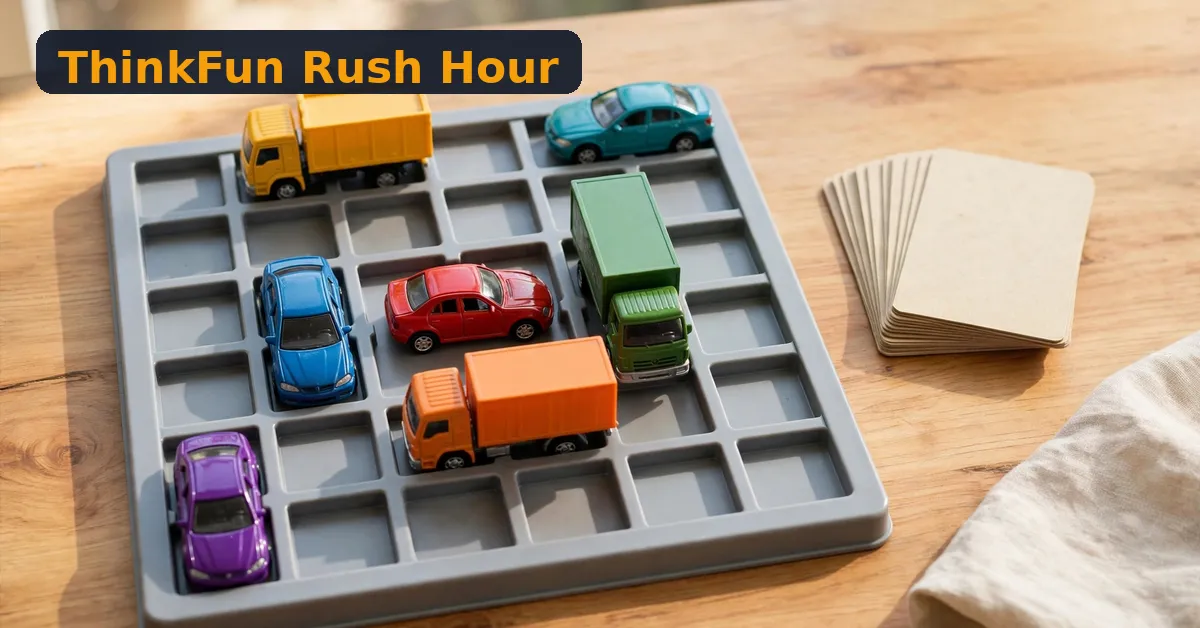
The short version: ThinkFun Rush Hour is a single-player sliding-block logic game for ages 8 and up. You set up a challenge card on the traffic grid, then slide 15 blocking cars and trucks out of the way until the red car can exit. The box holds 40 challenges from Beginner to Expert, with solutions, plus a Game-Go storage bag. It costs about $19.99, often less on discount. The catch is scope: one player only, small pieces that younger siblings will swallow or scatter, and an Expert level that genuinely frustrates younger kids.
Best for: Kids 8 and up who like puzzles, screen-free gifts, classrooms, and adults who want a thinking game that is not a phone app.
Skip it if: You want a family game night title, or the player is under 8 (the separate Junior edition fits younger kids).
What Is Rush Hour?
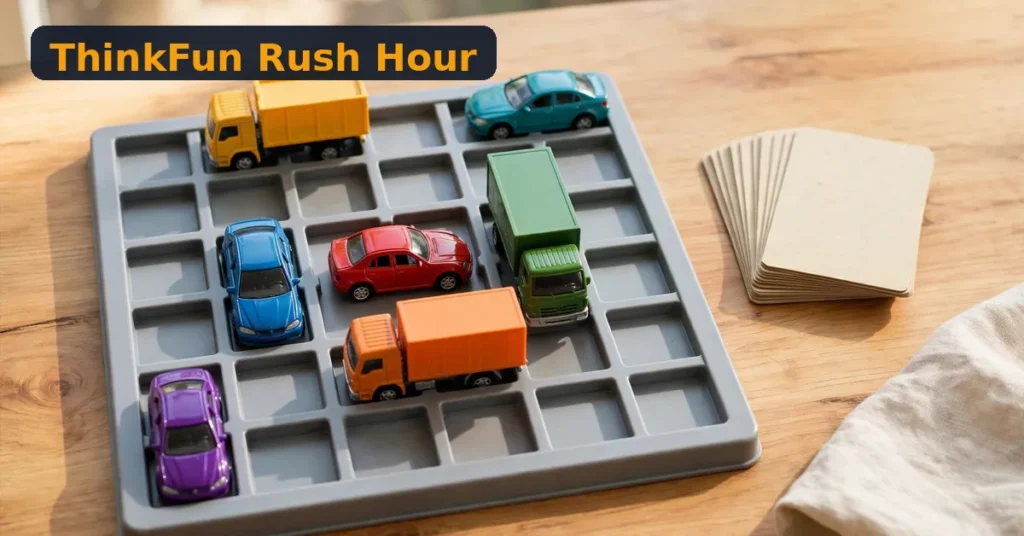
Rush Hour is a logic puzzle disguised as a traffic jam. Each challenge card shows a starting layout. You place the cars and trucks on the grid exactly as shown, then slide them — forward and backward only, never sideways — until the red car has a clear path out. There is no timer, no opponent, and no luck. Every puzzle has a solution, and the only question is whether you can find it.
In addition, the difficulty curve is the whole design. Beginner cards teach the sliding rules in a few moves. Intermediate cards add planning. Advanced cards punish careless moves. Expert cards demand that you think five moves ahead. That ladder is why the game lasts: a child who finishes Beginner in week one still has three levels to grow into.
Who Is ThinkFun?
ThinkFun is the world’s leading maker of brain games, with more than 50 million games sold across its catalog. Rush Hour is its flagship: an international bestseller for over 20 years, voted one of Parents’ Choice Best 25 Toys of 25 Years, and a winner of the MENSA Select Award and the Oppenheim Platinum Award. That record matters because logic games live or die on puzzle quality, and a two-decade bestseller has had its puzzles tested by millions of players.
What You Get in the Box
The grid, the cars and the 40 challenges
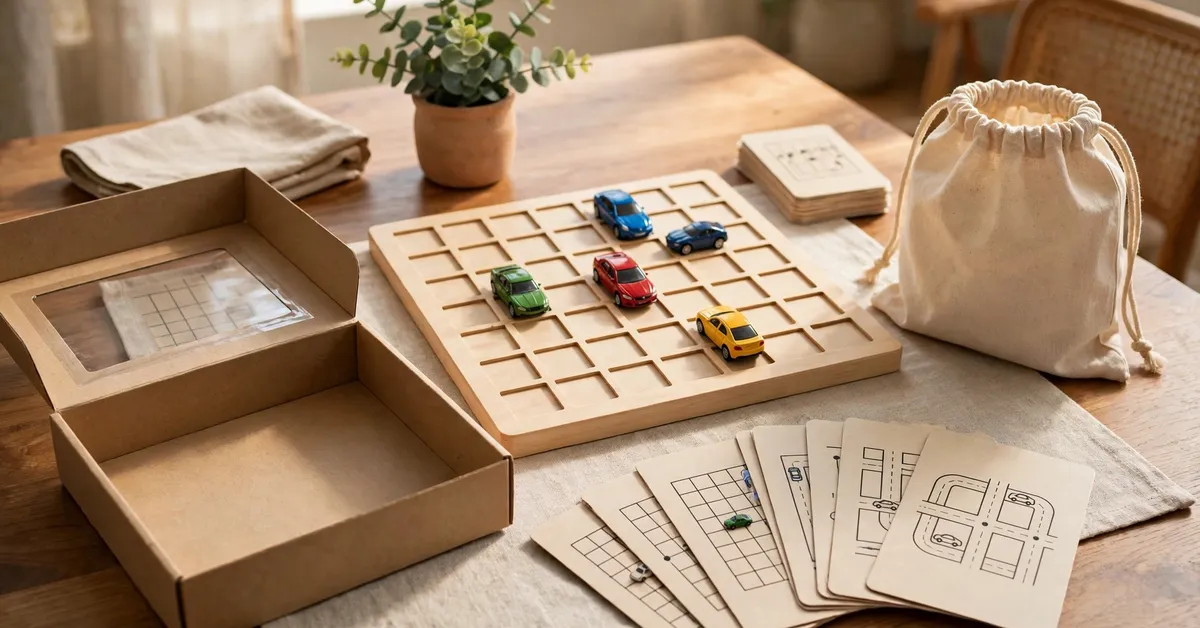
The box holds the Rush Hour Traffic Grid with built-in card storage, 40 challenge cards from Beginner to Expert with solutions printed on the back, 15 blocking cars and trucks, 1 red escape car, and a Game-Go bag for travel. Setup takes under a minute: pick a card, place the vehicles, start sliding. Cleanup is just as fast, since the grid stores the cards and the bag holds the pieces.
Skills it actually builds
Playing through the challenges builds sequential reasoning and planning. Each puzzle forces the player to think in chains: if I move this truck, that car blocks the exit, so I must first move the other car. That is the same thinking behind math problem-solving and coding logic, delivered without a screen. Teachers use it for exactly that reason, and parents report it as one of the few “educational” toys kids ask for by name.
The honest limits: solo play, small pieces, peeking
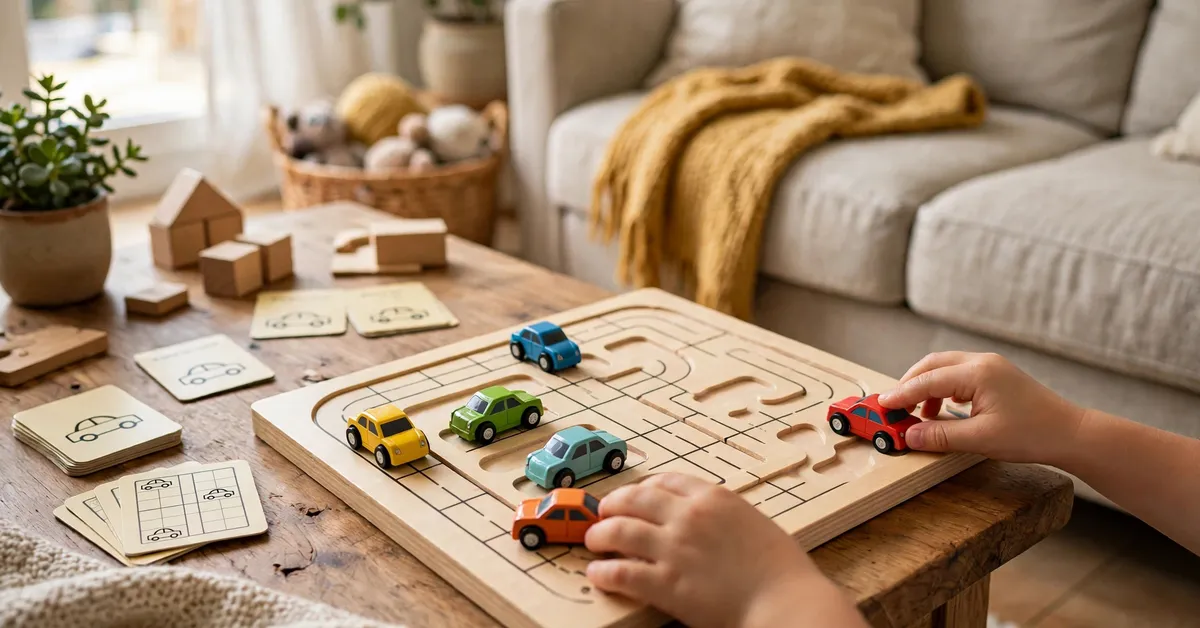
First, it is strictly one player. There is no head-to-head mode in this box, so family game night buyers should look at the separate Rush Hour Duel edition instead. Second, the pieces are small. Keep the game away from toddlers, and expect the occasional lost truck under furniture. Third, the solutions sit right on the back of each card, so impatient players will peek. That skips the struggle that builds the skill, so younger players need a gentle rule: try ten minutes before flipping the card.
Pricing and Full Cost
The price runs about $17 to $22 depending on the seller, often around $19.99, and it is frequently discounted. Prices move, so check the live figure before you order. The full cost picture:
- ThinkFun Rush Hour (one game): about $19.99.
- Replacement pieces: not sold separately in most cases, so the bag matters.
- Expansions: none required; the 40 included challenges are the full game.
- Subscriptions or apps: none.
By comparison, a decent board game costs $25 to $40 and needs multiple players, while a puzzle app costs nothing and teaches nothing about patience. Rush Hour sits in the sweet spot: cheaper than most board games, longer-lived than most puzzles, and fully screen-free.
Pros and Cons
Pros
- 40 challenges across 4 difficulty levels — months of play, not a weekend.
- 4.8 stars from 9,355 ratings, with 10 million-plus units sold worldwide.
- 20-plus awards, including MENSA Select and Parents’ Choice Best 25 Toys of 25 Years.
- Builds real skills: sequential reasoning, planning, problem-solving.
- Screen-free, travel-friendly, setup under a minute, with a storage bag included.
- About $19.99 — cheaper than most board games, longer-lived than most puzzles.
Cons
- Single-player only; no head-to-head play in this box.
- Small pieces — keep away from toddlers, and expect lost trucks.
- Solutions on the back of each card tempt players to peek.
- Expert levels genuinely frustrate younger players; the 8-plus age floor is real.
- Not for under-8s; the separate Junior edition fits younger kids.
- Frequently discounted, so gift buyers should compare sellers before ordering.
Who Should Buy Rush Hour?
Buy it if you want a screen-free gift for a kid 8 or older who likes puzzles, or a classroom tool that teaches planning without feeling like homework. It also suits adults who enjoy logic puzzles, since the Expert cards challenge grown-ups too. Therefore, at about $20, it is one of the safest gift buys in the toy aisle.
Skip it if you want a multiplayer family game, or the player is under 8. Buy the Junior edition for younger kids, or the Duel edition for two players.
Rush Hour vs the Competition
Similarly, other logic games exist, but few match this record: 10 million-plus sold, 20-plus awards, and a 4.8-star rating across thousands of buyers. Puzzle apps are cheaper and far easier to abandon. Generic sliding puzzles lack the difficulty ladder that keeps Rush Hour alive for months. In conclusion, the competition is not really other games. It is the phone. Against the phone, a $20 box that kids voluntarily return to is a win.
My Exclusive Rush Hour Bonuses
Order through the link on this page and you also get two free guides I made for puzzle-loving families. They are instant PDF downloads, no forms and no waiting.
Bonus 1 — Logic Game Challenge Tracker. A printable tracker for all 40 challenges: date solved, moves used, and a no-peeking pledge for younger players.
⬇️ Download Bonus 1 Free (PDF)
Bonus 2 — Screen-Free Gift Guide for Ages 8+. Ten logic and puzzle gifts that actually get played, with age fit and why each one lasts.
⬇️ Download Bonus 2 Free (PDF)
Frequently Asked Questions
What age is Rush Hour really for?
Ages 8 and up. Younger kids can enjoy the Beginner cards with help, but the Expert levels assume real planning skill. The Junior edition fits ages 5 and up.
Can two people play it?
Not in this box — it is strictly single-player. For head-to-head play, look at the separate Rush Hour Duel edition.
How long does it take to finish all 40 challenges?
Weeks to months, depending on the player. Beginner cards take minutes. Expert cards can take days of returning to the same puzzle.
Are the pieces easy to lose?
They are small, so yes, pieces can go missing under furniture. The included Game-Go bag helps if it is used every time.
Is it good for classrooms?
Yes. Teachers use it for sequential reasoning and planning practice, and the lack of a screen makes it easy to run in a classroom.
Does it need batteries or an app?
No. It is a fully physical game: grid, cars, cards, and bag. Nothing to charge, update, or subscribe to.
Final Verdict: Is Rush Hour Worth It?
Finally, if you want a screen-free gift that a kid will still play in three months, this is one of the safest $20 purchases in the toy aisle, and the 20-year record backs it up. If you want multiplayer game night, buy something else. Know which need you have before you order. I rate it 4.3 out of 5.
✍️ My Personal Verdict
I went through the box contents, the challenge curve and the buyer record for this review. What earns my respect is the honesty of the design: one mechanic, forty puzzles, four levels, no gimmicks, and a record of 10 million players who kept coming back. What costs it a higher score is the narrowness — one player, small pieces, and solutions that sit one flip away. A great solo puzzle, not a family game, and this review says so plainly.
Affiliate Disclosure
ZoxDeal is reader-supported. When you buy through links on this page, we may earn an affiliate commission at no extra cost to you. As an Amazon Associate, ZoxDeal earns from qualifying purchases. Prices and availability change often, so check the current price on Amazon before you order. Our ratings come from research into specs, manuals, and verified buyer reports — never from payment by any brand.